NewVol. 57 · Published Nov 26, 2026 · Book + Claude skill + MCP
The Steam Wishlist Playbook
Build Steam Wishlists Before Launch With a Store-Page-First Plan
$29 $5.80 Save 80%
Instant digital delivery. About 10k words.
About this playbook
Store page, festivals and marketing before launch
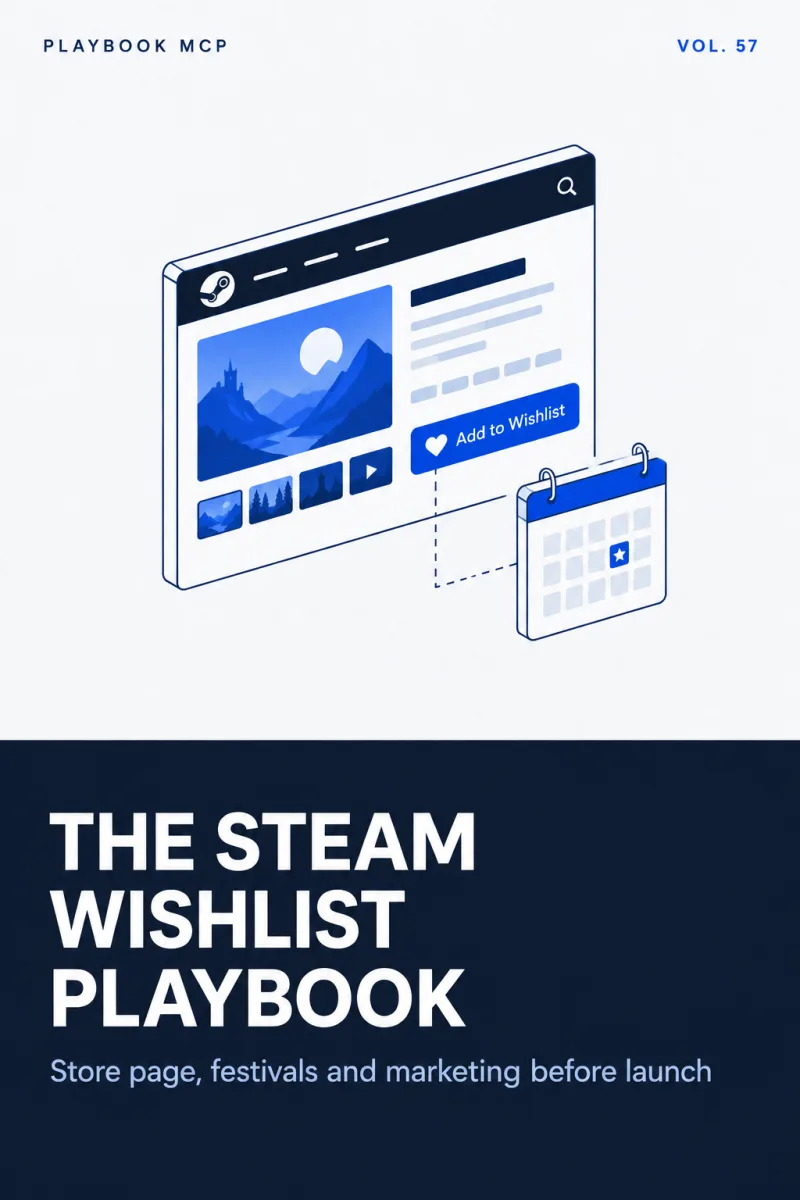
Most indie pre-launch plans begin with festivals and social posts and send traffic to a store page that doesn't yet say what the game is. The Steam Wishlist Playbook flips that order: position the game, build the page, publish Coming Soon, instrument, and only then grow.
It walks through nine steps, from the hook and tags to capsules, trailer, demo, Next Fest, third-party festivals, creators and the final two weeks before launch. Each step follows current Steamworks rules, Steam policy and consumer-protection law on reviews, disclosure and email. It also gives you prompts for an AI agent, a checklist, a measurement plan built on Steamworks reports and UTM analytics, and 15 common mistakes with their fixes.
Who it's for
- Indie developers preparing a PC game for launch on Steam in 2026–2027
- Small studios that want a pre-launch plan in order rather than a list of tactics
- Product or marketing leads working with game teams on store pages, festivals and creator outreach
- Developers choosing which Next Fest to enter, knowing each game gets only one
- Teams who want an AI agent to draft copy, audit assets and read Steamworks exports
What you'll be able to do
- Write a one-sentence hook, pick 5–10 comparable games and weight 20 accurate Steam tags
- Produce capsules, screenshots and a gameplay-first trailer that meet Steam's asset specs and capsule rules
- Publish Coming Soon early and plan an exact release date that qualifies for the Personal Calendar
- Track every channel with UTM links and read wishlist, traffic and UTM reports weekly
- Release a demo well before Next Fest and time the one-time wishlist notification around the email cooldown
- Run third-party festival applications and creator outreach with tracked links and proper disclosure
- Avoid policy accidents such as text on capsules, date slips inside the lock window and incentivised reviews
What's inside
Inside this volume
- 01
The problem and what good looks like
How Next Fest growth, lower per-wishlist conversion, the June 2026 front page change and the new AI disclosure rules affect indie launches.
- 02
Positioning against the Steam audience
A hook pattern, how to choose comparables, Steam's tag rules and how to check genre fit before you spend on visibility.
- 03
Building the store page
Asset sizes, capsule content rules, screenshot and trailer specs, description templates, AI disclosure and a 10-second test.
- 04
Coming Soon, dates and the Personal Calendar
Review timing, date display options, the two-week lock and the 60-day and three-week calendar eligibility rules.
- 05
Instrumentation and measurement
A UTM naming convention, Steamworks baseline reports and a metrics table where each signal has an action.
- 06
Demos, festivals and creators
Demo and playtest rules, Next Fest timelines and edition choice, third-party festival tracking, Curator Connect, keys and FTC/CMA disclosure.
- 07
Prompts, checklist and common mistakes
A gated main prompt, 15 focused prompts, a full pre-launch checklist and 15 mistakes with their causes and fixes.
Use it with your AI agent
Ask for the work. Your agent follows the playbook.
Install the Claude skill or connect the MCP with your license key. Then ask in plain language:
- “Here are our game notes and 10 candidate comparables. Write five hooks, pick the best comparables and give me 20 weighted Steam tags with the top five justified.”
- “Audit these four capsule drafts and our screenshot list against Steam's asset specs and capsule rules, and list every violation with a fix.”
- “Our target Next Fest is February 2027 and launch is May 2027. Build a dated plan for the demo release, the demo notification and the exact-date switch.”
- “Here are this week's wishlist report, traffic breakdown and UTM exports. Compute the chapter 7 metrics, rank our sources and tell me which action each signal triggers.”
Questions
FAQ
Is this only for games that already have a Steam page?
No. It starts before the page exists, with an intake checklist and positioning, and runs through to launch day. If your page is already live, the agent asks for your recent wishlist data and picks up from there.
Does it guarantee a number of wishlists or sales?
No. It cites dated public benchmarks only for orientation and tells you to make decisions from your own Steamworks and UTM data. Valve says there is no formula that turns wishlists into sales.
Does it cover giveaways and paid creator deals?
Yes. It explains Steam's review rules, FTC and UK disclosure rules for creators and the grey zone around wishlist giveaways, and gives you compliant alternatives. It notes that this is practical information, not legal advice.
How current are the Steam rules in it?
Facts were checked against sources dated up to November 2026, including the January 2026 AI disclosure changes and the Personal Calendar. Steam changes often, so each rule links to the Steamworks page you should re-check before acting.
Can my AI agent log into Steamworks for me?
No, and the playbook says not to give an agent your credentials. The agent drafts copy, audits assets, builds calendars and reads the reports you export. You make the decisions and press the buttons.
Better together
The Game Maker's Grimoire
Design, make and launch games with AI.
$261 $9.80 Save 96%